RAVENFORGE / SIGNAL & TRANSDUCTION RESEARCH LOG — A06
RAVENFORGE
Signal & Transduction Research Log
A06 — Onboard Preamp Architecture
pickup-facing boundary 이후 gain · mixing · EQ · output을 하나의 low-Z signal system으로 설계하는 방법
문서 목적 |
Code | A06 |
|---|---|
Focus | onboard preamp architecture · pickup isolation · mixing · gain structure · EQ/filter law · output boundary · power/bypass |
Evidence | manufacturer technical documentation · analog circuit application notes · pickup modeling literature · RavenForge synthesis |
RavenForge link | A05 active boundary → A06 onboard architecture → B06 internal signal path → A07 headroom/power |
Upstream logs | A03 · A04 · A05 · B03 |
Downstream logs | B06 · A07 · A08 · C03/C04 (experiment deferred) |
Status | Literature / technical verification complete · architecture framework established · prototype measurement pending |
Date | 2026-09-18 |
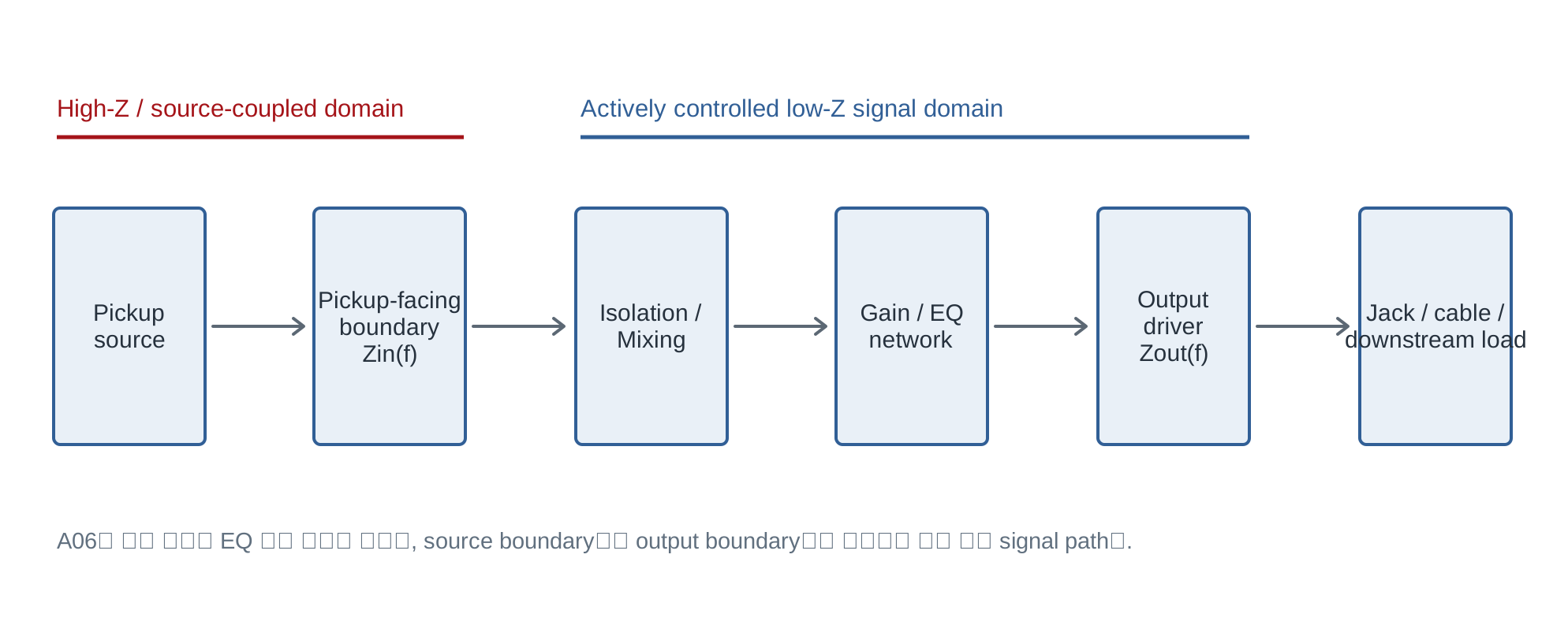
Figure 1. A06 system boundary. 온보드 프리앰프의 설계 대상은 EQ 모듈 하나가 아니라 pickup-facing boundary부터 output boundary까지 이어지는 전체 active signal domain이다.
1. 연구 질문 — “Active bass”에서 실제로 active인 것은 어디부터인가
온보드 프리앰프가 장착된 악기를 단순히 passive/active 두 종류로 나누면 중요한 구조적 차이가 사라진다. 패시브 픽업과 passive volume/blend network를 그대로 거친 뒤 EQ만 능동화할 수도 있고, pickup 직후부터 buffer를 두어 source loading을 고정할 수도 있으며, 각 pickup을 독립적으로 buffer한 다음 active mixing을 수행할 수도 있다. John East UNI-PRE처럼 active path와 passive path 자체를 독립적으로 구성하고 각 pickup에 별도 FET input stage와 gain trim을 두는 시스템도 존재한다 [6].
A06 Core Position |
2. Architecture taxonomy — 제품명이 아니라 signal path로 분류한다
아래 Type I–V는 업계의 공식 분류가 아니라 RavenForge에서 구조 비교를 위해 사용하는 working taxonomy다. 분류의 목적은 어떤 제품이 “상위”인지 정하는 것이 아니라, 어떤 loading과 pickup interaction을 보존하고 어떤 interaction을 격리하는지를 명시하는 데 있다.
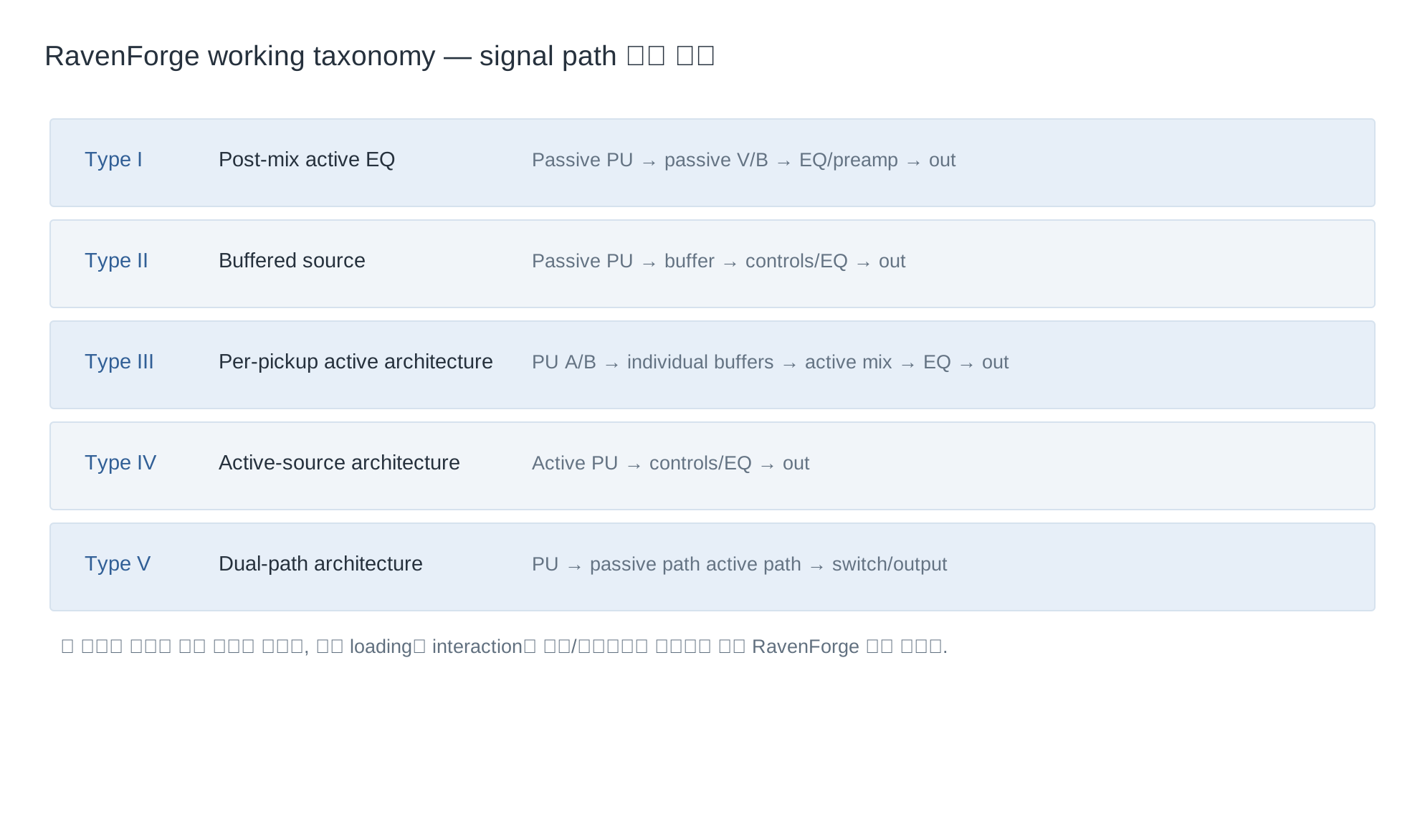
Figure 2. RavenForge working taxonomy. 같은 “active bass”라도 active domain이 시작되는 위치와 mixing 방식은 서로 다를 수 있다.
Type | Signal path | 설계상의 의미 |
|---|---|---|
I — Post-mix active EQ | Passive PU → passive V/B → EQ/preamp → out | 기존 pickup/pot interaction을 유지한 채 후단만 능동화 |
II — Buffered source | Passive PU → buffer → controls/EQ → out | pickup-facing load를 buffer input으로 명시적으로 정의 |
III — Per-pickup active | PU A/B → individual buffers → active mix → EQ → out | pickup 간 electrical interaction을 줄이고 gain matching 가능 |
IV — Active-source | Active PU → controls/EQ → out | source 자체가 이미 low-Z active stage를 포함 |
V — Dual-path | PU → passive path ∥ active path → output | passive reference와 active path를 별도로 유지 |
UNI-PRE는 Type III와 V의 특성을 동시에 보여주는 대표 사례다. 제조사는 active/passive volume·blend path가 완전히 독립되어 있고, active path에서는 각 pickup이 자체 input buffer/amplifier와 0–12 dB gain trim을 갖는다고 설명한다 [6]. 이 때문에 서로 출력이 다른 pickup도 active path에서 level-match할 수 있다.
3. Input boundary — Zin은 단순한 호환성 숫자가 아니다
A03–A05의 관점에서 passive magnetic pickup은 zero-impedance voltage source가 아니라 주파수 의존 source impedance ZPU(f)를 가진 resonant source다. 따라서 프리앰프의 input impedance Zin(f)은 pickup을 “그대로 받는” 투명한 숫자가 아니라 loaded resonance의 damping condition을 결정하는 경계조건 가운데 하나다 [1,9].
제품 | 공개 Input Impedance | 해석 경계 |
|---|---|---|
Darkglass Tone Capsule | 500 kΩ | 해당 제품 공식 사양 [2] |
ZUTA Bass Core | 1 MΩ | 해당 제품 공식 사양 [7] |
Aguilar OBP-3 | 1 MΩ | 해당 제품 공식 사양 [3] |
Bartolini NTMB+FL | 400 kΩ | 해당 제품 공식 사양 [4] |
EMG BQC | 1 MΩ | 해당 제품 공식 사양 [5] |
John East UNI-PRE | 공개 수치 확인 안 됨 | 수치를 추정하지 않음 [6] |
“높은 Zin = 더 좋은 소리”라는 일반화는 부적절하다. 높은 Zin은 일반적으로 pickup resonance에 대한 resistive damping을 줄이는 방향으로 작용하지만, 의도적으로 250–500 kΩ 수준의 load에서 voicing된 pickup/network라면 1 MΩ buffer로 옮기는 것 자체가 다른 tonal condition이다. A06에서는 Zin을 quality ranking이 아니라 voicing parameter로 기록한다.
4. Pickup mixing — blend pot 하나로 topology를 설명할 수 없다
Passive blend에서는 각 pickup의 source impedance와 blend/volume pot이 하나의 network를 형성하므로 한 pickup의 control position이 다른 pickup이 보는 load와 mixed response에 영향을 줄 수 있다. 반대로 각 pickup을 독립적으로 buffer한 후 mixing하면 mixer는 low-Z sources를 다루게 되고 pickup 자체의 mutual loading을 크게 줄일 수 있다.
UNI-PRE의 dual active/passive path 설명은 이 차이를 제품 수준에서 명확히 보여준다. 제조사는 active mode에서 각 pickup이 독립 input buffer/amplifier를 거치기 때문에 서로 격리되며 smooth blend와 pickup level matching이 가능하다고 설명한다 [6].
Specification rule |
5. Gain structure — EQ boost와 “프리앰프 gain”은 같은 것이 아니다
온보드 시스템에서 gain을 하나의 숫자로 합쳐 기록하면 clipping이 어디에서 발생하는지 추적하기 어렵다. 분석상 source level → input gain → mixing/summing → EQ gain → output stage를 분리하는 편이 적절하다. Bartolini NTMB+FL은 cavity 내부 0–12 dB gain trim을 EQ boost/cut과 별도로 제공하며, UNI-PRE도 pickup별 0–12 dB active gain trim을 둔다 [4,6].
큰 EQ boost를 사용하는 시스템에서는 input stage가 clipping되지 않았더라도 EQ 이후 stage에서 available swing을 초과할 수 있다. 따라서 A06의 gain specification은 단순 overall gain이 아니라 stage별 gain allocation, worst-case cumulative boost, 그리고 어떤 지점을 reference level로 삼는지까지 포함해야 한다.
6. EQ architecture — 세 개의 노브가 만드는 것은 세 개의 숫자가 아니라 reachable tonal space다
제품 | 공개 EQ specification | Architecture상 의미 |
|---|---|---|
Darkglass Tone Capsule | 70 Hz ±12 dB / 500 Hz ±12 dB / 2.8 kHz ±12 dB | conventional treble 대신 high-mid control [2] |
ZUTA Bass Core | <40 Hz 약 ±16 dB / selectable mid 약 ±15 dB / >3.25 kHz 약 ±12 dB | 6-way mid target 선택; 제조사 neutral ±0.5 dB claim [7] |
Bartolini NTMB+FL | 30 Hz ±12 dB / 250 Hz ±12 dB / 6.5 kHz ±15 dB | 별도 0–12 dB gain trim [4] |
Aguilar OBP-3 | 40 Hz ±18 dB / 400 또는 800 Hz ±16 dB / 6.5 kHz ±16 dB | mid center 선택 [3] |
EMG BQC | Bass ±12 dB @20 Hz / sweepable mid 100 Hz–1 kHz / adjustable treble | active/passive pickup input, 18 V 권장 [5] |
John East UNI-PRE | Bass window + sweep mid 100 Hz–2.5 kHz + adjustable treble shelf | pickup gain, pre-shape와 EQ voicing까지 내부 조정 [6] |
이 차이는 어느 frequency가 “더 좋다”는 문제가 아니다. Tone Capsule처럼 conventional treble 대신 2.8 kHz high-mid를 두면 사용자가 접근할 수 있는 tonal operation 자체가 달라진다. Sweepable mid나 selectable center frequency는 reachable state-space를 확장한다. 따라서 EQ specification에는 center/corner frequency뿐 아니라 shelf/peaking 여부, Q 또는 slope, boost/cut range, control law까지 포함하는 것이 이상적이다.
TI의 SLOA042는 classic Baxandall 계열 active tone control의 한 구현에서 frequency-setting network를 op-amp feedback loop에 두는 방법을 설명한다 [10]. 그러나 이 문헌이 존재한다고 해서 모든 onboard preamp를 Baxandall로 분류할 수는 없다. 제조사 회로도나 신뢰 가능한 회로 자료가 없는 제품의 내부 filter topology는 추정하지 않는다.
7. Active-flat ≠ Passive bypass — reference state를 분리한다
EQ를 center detent에 둔다고 해서 active signal path가 사라지는 것은 아니다. ZUTA Bass Core는 모든 knob가 neutral일 때 20 Hz–20 kHz에서 최대 ±0.5 dB 영향이라고 주장하지만, 동시에 1 MΩ input / 1 kΩ output의 active circuit이다 [7]. Frequency magnitude가 거의 flat하더라도 source loading, noise, maximum signal swing, output impedance와 downstream coupling은 이미 passive path와 다르다.
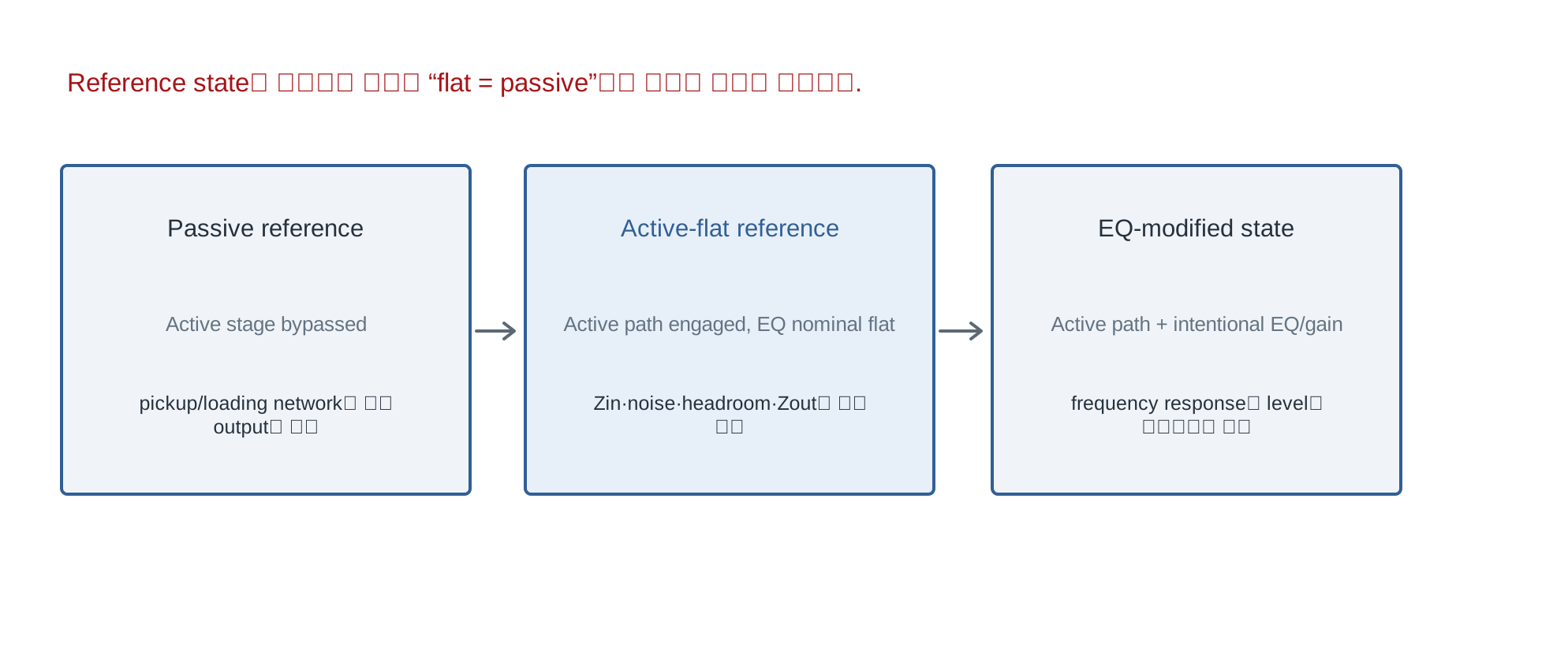
Figure 3. A06 reference-state model. Passive reference, active-flat reference, EQ-modified state를 분리해야 meaningful comparison이 가능하다.
Reference state | 정의 | 비교 시 주의 |
|---|---|---|
Passive reference | active stage를 통과하지 않는 passive path | 원래 pickup/pot/cable loading을 유지 |
Active-flat reference | active path를 통과하되 EQ transfer가 nominal flat | Zin·noise·headroom·Zout는 이미 변경 |
EQ-modified state | active EQ/gain이 의도적으로 변경된 상태 | response와 level이 함께 변할 수 있음 |
8. Output boundary — preamp는 악기를 low-Z source로 다시 정의한다
대표 제품의 output impedance는 Tone Capsule 1 kΩ, ZUTA Bass Core 1 kΩ, EMG BQC 2 kΩ, Aguilar OBP-3 100 Ω으로 공개되어 있다 [2,3,5,7]. 이러한 low-Z output은 passive magnetic pickup이 긴 cable capacitance와 직접 결합될 때보다 downstream cable/load의 영향에 덜 민감한 source condition을 만든다.
다만 “cable effect가 사라진다”라고 표현하는 것은 과도하다. Cable은 여전히 output stage가 구동해야 하는 load이며, 실제 closed-loop Zout와 capacitive-load stability는 frequency와 circuit topology에 의존한다. A06에서는 output impedance와 recommended minimum load를 별도 specification으로 기록한다. ZUTA는 10 kΩ 이상 load를 권장한다 [7].
9. 9 V / 18 V — tone adjective가 아니라 operating condition
18 V를 사용한다고 자동으로 “음질이 좋아지는 것”은 아니다. Single-supply analog stage에서 supply voltage는 가능한 signal swing의 상한을 결정하는 요소지만 실제 usable swing은 device의 input common-mode range, output swing, bias point, load current, closed-loop gain과 distortion criterion에 의해 제한된다.
Analog Devices AN-581은 single-supply op-amp에서 output을 midsupply 부근에 bias하는 것이 주어진 supply에서 최대 양방향 swing을 확보하는 일반적 방법임을 설명하고, 단순 resistor-divider bias가 power-supply rejection과 안정성 문제를 만들 수 있음을 지적한다 [8]. EMG BQC 역시 strong playing과 bass/treble boost 상황에서 18 V 운용을 권장한다 [5].
A06 boundary |
10. Power · noise · bias — battery도 signal architecture 안에 있다
온보드에서는 battery와 bias/reference network를 악기 밖의 조건으로 취급할 수 없다. Tone Capsule은 약 2.4 mA의 current consumption을 공개하고, EMG BQC는 9 V에서 600 µA, 18 V에서 740 µA를 명시한다 [2,5]. 낮은 current draw는 battery life에 유리하지만, low-power 자체가 자동으로 low-noise, high-headroom 또는 wide-bandwidth를 의미하지 않는다.
Single-supply stage의 virtual reference와 decoupling은 transfer와 안정성에 직접 관여한다. AN-581은 midsupply divider를 충분히 bypass하지 않으면 supply variation이 reference를 통해 signal path로 유입되어 PSR이 악화될 수 있고, 큰 output current 상황에서 instability가 생길 수 있음을 설명한다 [8]. 따라서 supply voltage뿐 아니라 reference topology, decoupling, current draw, turn-on behavior도 architecture documentation에 포함해야 한다.
11. Published examples — 같은 “3-band preamp”라도 구조는 동일하지 않다
System | Zin | Zout | 확인 가능한 구조적 특징 |
|---|---|---|---|
Darkglass Tone Capsule | 500 kΩ | 1 kΩ | 70 / 500 / 2.8k, 9–18 V, ~2.4 mA [2] |
ZUTA Bass Core | 1 MΩ | 1 kΩ | dual-stage, selectable mid, neutral ±0.5 dB claim, ≥10 kΩ load [7] |
Bartolini NTMB+FL | 400 kΩ | 미공개 | 0–12 dB gain trim + 3-band EQ, 9/18 V [4] |
Aguilar OBP-3 | 1 MΩ | 100 Ω | discrete FET input, selectable 400/800 Hz mid, 9/18 V [3] |
EMG BQC | 1 MΩ | 2 kΩ | active/passive pickup input, sweep mid, 18 V recommended [5] |
John East UNI-PRE | 미공개 | 미공개 | independent active/passive paths, per-pickup FET stage + gain trim [6] |
이 표에서 공개되지 않은 값을 추정해서 채우지 않는 원칙이 중요하다. 특히 UNI-PRE의 Zin/Zout이나 Bartolini NTMB+FL의 Zout처럼 공식 문서에서 확인되지 않은 값은 unknown으로 남긴다. “transparent”, “high headroom”, “studio-quality” 같은 제조사 표현도 독립 실측 사실과 구분한다.
12. Myth audit — 기존 초안에서 유지·수정·삭제할 주장
Claim | 처리 | 근거 / 주의 |
|---|---|---|
Onboard preamp는 단순 EQ가 아니다 | 유지 | input, mixing, gain, output, power까지 포함하는 실제 제품 사례가 존재 |
높은 Zin이 무조건 더 좋다 | 삭제 | source voicing과 intended load에 따라 loaded response가 달라짐 |
Passive blend와 buffered blend는 동일하다 | 삭제 | pickup 간 loading architecture가 다름 |
모든 preamp는 input → mix → EQ → out 순서다 | 조건부 수정 | 실제 stage order와 control placement는 제품별 상이 |
OBP-3는 Baxandall 구조다 | 삭제 | 공개 근거 없이 filter topology를 추정할 수 없음 |
Active-flat = passive | 삭제 | Zin/Zout/noise/headroom boundary가 다름 |
18 V는 무조건 음질을 향상시킨다 | 삭제 | supply/headroom operating condition으로 다뤄야 함 |
18 V는 정확히 두 배 usable headroom | 삭제 | device·bias·load·clipping criterion 의존 |
FET input은 자동으로 low-noise다 | 삭제 | source impedance와 voltage/current noise를 함께 평가해야 함 |
13. RavenForge Onboard Electronics Specification Bundle
Specification chain |
영역 | 필수 기록 항목 |
|---|---|
Source | passive / active pickup, nominal output, source Z(f) |
Input | Zin, input capacitance 또는 input network |
Isolation | none / common buffer / per-pickup buffer |
Mixing | passive blend / buffered blend / active summing |
Gain | input / pickup trim / mix / EQ / output gain |
EQ | topology(확인 가능한 경우), frequency, Q/slope, boost/cut range, control law |
Reference | passive / active-flat / shaped state 정의 |
Dynamic | supply, maximum input/output, clipping criterion |
Output | Zout, recommended minimum load |
Noise | input-referred 또는 output noise, measurement bandwidth/weighting |
Power | supply range, current draw, battery switching, reference/decoupling |
Bypass | true passive / buffered bypass / no bypass |
Validation | published spec / bench measurement / prototype-specific acceptance threshold |
14. RavenForge 모델에의 적용
A06에서 얻는 가장 중요한 설계 원칙은 preamp를 가격 순서로 등급화하지 않는 것이다. ZUTA, Noll, John East처럼 서로 다른 모듈을 “Standard → Upgrade → Premium”으로만 배치하면 architecture 차이를 놓친다. 특히 UNI-PRE처럼 per-pickup buffering과 독립 active/passive path를 가진 시스템은 단순 EQ module 교체 이상의 topology 변화다.
ASKR처럼 source 자체가 active pickup인 구조에서는 passive magnetic pickup과 같은 Zin 문제를 그대로 적용할 수 없다. 반대로 EDDA처럼 pickup interaction과 passive filtering 자체를 voice의 일부로 설계한다면 pickup 직후 buffer는 의도했던 coupled behavior를 제거할 수 있다. EMBLA 역시 사용하려는 pickup과 passive controls의 위치에 따라 “preamp 선택”이 곧 boundary 선택이 된다.
RavenForge design rule |
15. Claim-by-Claim Evidence Matrix
주장 | 직접 근거 | Evidence level | 주의사항 |
|---|---|---|---|
온보드 프리앰프는 EQ 외에 input/output/gain architecture를 포함할 수 있다 | UNI-PRE, NTMB+FL, BQC 제조사 문서 [4–6] | High | 모든 제품이 동일 구조라는 뜻은 아님 |
Zin은 제품별로 400 kΩ–1 MΩ 이상 차이가 있다 | Darkglass/ZUTA/Aguilar/Bartolini/EMG 공식 사양 [2–5,7] | High | 해당 모델에 한정 |
Per-pickup buffer는 pickup 간 direct loading을 줄인다 | UNI-PRE 제조사 회로 설명 + circuit theory [6] | High | 실제 mixed response는 downstream topology에도 의존 |
Active-flat은 passive bypass와 동일하지 않다 | 공개 Zin/Zout 및 active path 구조 [2,5,7] | High | “audibly different” effect size는 별도 측정 필요 |
Supply voltage만으로 usable headroom을 정확히 결정할 수 없다 | AN-581 [8] | High | device별 datasheet와 load 조건 필요 |
EQ control의 frequency allocation은 reachable tonal space를 규정한다 | 제품별 공식 EQ 사양 [2–7] | Medium–High | 청감 우열을 의미하지 않음 |
모든 onboard preamp를 Baxandall로 볼 수 없다 | TI 문헌은 특정 Baxandall 구현만 설명 [10] | High | 회로 미공개 제품은 topology unknown |
Battery/reference/decoupling은 안정성과 transfer에 관여한다 | AN-581 [8] | High | prototype implementation은 후속 검증 필요 |
16. 연구 경계와 후속 회차
A06에서는 architecture와 specification language까지만 확정한다. A07 — 9V vs. 18V: Headroom and Dynamic Range에서는 supply voltage, rail margin, clipping과 signal level을 별도로 다룬다. B06 — Rethinking the Internal Signal Path에서는 여기서 정리한 stage와 boundary를 실제 악기 내부 control/routing architecture로 확장한다.
실제 측정이 필요한 C03 — Preamp Frequency Response Mapping에서는 EQ curve, active-flat response, gain과 output response를 측정하고, C04 — Headroom Test에서는 9/18 V maximum swing, THD+N 및 clipping threshold를 검증한다. 현재 master schedule 방침에 따라 C-series 실험은 후순위로 보류한다.
17. Source status / interpretation boundary
본 회차의 제품 수치는 제조사 및 공식 기술 문서를 우선 사용한다. “transparent”, “high headroom”, “studio-quality” 등의 표현은 manufacturer claim으로 취급하며 독립적인 측정 사실과 동일시하지 않는다. ZUTA의 neutral ±0.5 dB와 +20 dBu input-level 표기 역시 제조사가 공개한 specification이다 [7].
또한 공개 회로도가 없는 제품의 op-amp 종류, filter topology, Q, internal gain distribution은 추정하지 않는다. 본 문서는 literature·circuit-theory·published specification 기반 architecture study이며 RavenForge prototype measurement를 포함하지 않는다. 실제 effect size와 acceptance threshold는 후속 C-series에서 결정한다.
18. 현재 결론 — Onboard preamp는 signal-domain architecture다
Current conclusion |
프리앰프의 핵심은 “3-band EQ가 들어 있다”가 아니다. 어디서 source를 격리하고, 어떻게 섞으며, 어느 단계에서 gain을 만들고, 어떤 tonal state-space를 허용하며, 어떤 dynamic/output boundary로 악기 밖에 신호를 전달하는지가 A06의 연구 대상이다. 따라서 RavenForge에서는 향후 onboard electronics를 component list가 아니라 signal architecture와 measurable specification bundle로 기록한다.
References
[1] RavenForge. A05 — Active Buffers and Input Impedance. Signal & Transduction Research Log, 2026-09-14.
[2] Darkglass Electronics. “B2M2 Tone Capsule.” Official product specifications: 500 kΩ input, 1 kΩ output, ~2.4 mA, 70 Hz / 500 Hz / 2.8 kHz ±12 dB, 9–18 V. https://www.darkglass.com/products/tone-capsule
[3] Aguilar Amplification. “OBP-3 — 3 Band, Boost/Cut, 9 or 18 Volt On Board Preamp.” Official specifications: 1 MΩ input, 100 Ω output, 40 Hz ±18 dB, 400/800 Hz ±16 dB, 6.5 kHz ±16 dB. https://aguilar.korg-kid.com/obp
[4] Bartolini. “NTMB+FL 3-Band EQ Preamp Module.” Official specifications: 400 kΩ input, 0–12 dB gain trim, 30 Hz ±12 dB, 250 Hz ±12 dB, 6.5 kHz ±15 dB, 9/18 V. https://bartolini.net/product/ntmbfl/
[5] EMG Pickups. “BQC Control — Active / Passive Pickup Input.” Installation Information 0230-0203K. 1 MΩ input, 2 kΩ output, 600/740 µA @ 9/18 V, 18 V recommended. https://www.emgpickups.com/pub/media/Mageants/b/q/bqc_control_b245_0230-0203rk.pdf
[6] East UK / John East. “UNI-PRE User Manual.” Independent active/passive paths; per-pickup Class-A FET input stages; 0–12 dB pickup gain; EQ details. https://www.east-uk.com/2025/11/28/uni-pre-5-knob-user-manual/
[7] ZUTA Group. “ZUTA Bass Core.” Official product specifications: 1 MΩ input, 1 kΩ output, recommended load ≥10 kΩ, dual-stage analog circuit, selectable mid, manufacturer neutral-response claim ±0.5 dB (20 Hz–20 kHz), 9–18 V. https://zutagroup.com/products/zuta-bass-core
[8] Kitchin, C. “AN-581: Biasing and Decoupling Op Amps in Single Supply Applications.” Analog Devices. https://www.analog.com/en/resources/app-notes/an-581.html
[9] Paiva, R. C. D.; Pakarinen, J.; Välimäki, V. “Acoustics and Modeling of Pickups.” Journal of the Audio Engineering Society, 60(10), 768–782, 2012. https://aes.org/publications/elibrary-page/?id=16551
[10] Harris, D. “Audio Tone Control Using the TLC074 Operational Amplifier.” Texas Instruments Application Report SLOA042, 2000. https://www.ti.com/lit/an/sloa042/sloa042.pdf