RAVENFORGE / DESIGN METHODOLOGY RESEARCH LOG — B02
RAVENFORGE
Design Methodology Research Log
B02 — Voicing Before Specification
Turning the Language of Sound into Measurable Design Requirements
Document Purpose Establish a design methodology in which RavenForge model development does not begin with a parts list. Instead, the player’s desired sonic intent and use context are defined first and then translated step by step from perceptual language → measurable target → subsystem requirement → actual specification. Custom-building examples such as Torillo’s “voice design / sonical presets” are examined as cases where sonic character is presented before the parts list, without adopting the maker’s wood–tone descriptions as scientific causality. The log also adapts requirements flow-down from QFD and systems engineering to build RavenForge’s `concept → target response → specification → prototype validation` framework. |
Code | B02 |
Focus | sonic intent · perceptual descriptor · target response · requirement allocation · specification traceability |
Evidence | timbre perception · QFD / systems engineering · documented luthier case studies |
RavenForge link | ASKR / EMBLA / EDDA concept → measurable target → architecture → prototype |
Downstream logs | A03 / A04 / C01 / C02 / A05 |
Status | Methodology framework established · model-specific target values pending validation |
1. Research Question — Are We Designing a Sound or Assembling a Specification Sheet?
Custom-instrument design can easily begin with the question, “Which wood, which pickup, which preamp should we use?” But that sequence can turn the parts themselves into the objective. The same pickup responds differently when its position and load change, and the same wood species can produce different results depending on the assembly’s mass, stiffness, damping, and coupling conditions. As established in A01 and A02, RavenForge’s actual causal chain is not a list of component names but a coupling of string/structure dynamics, spatial sampling, magnetic transduction, and electrical loading [R1,R2].
B02 asks the question in the opposite direction. Can we first define what kind of instrument we want in sonic, musical, and ergonomic language, operationalize the parts of that language that can be used in design as measurement targets, and only then derive the required architecture and component specifications? This approach does not preselect one parts combination as the answer; it is a methodology for maintaining traceability between intent and specification.
Core View Specification is an implementation, not the intent. In RavenForge, wood, pickup, preamp, scale, and control topology are not the goal; they are candidate solutions for implementing the goal. |
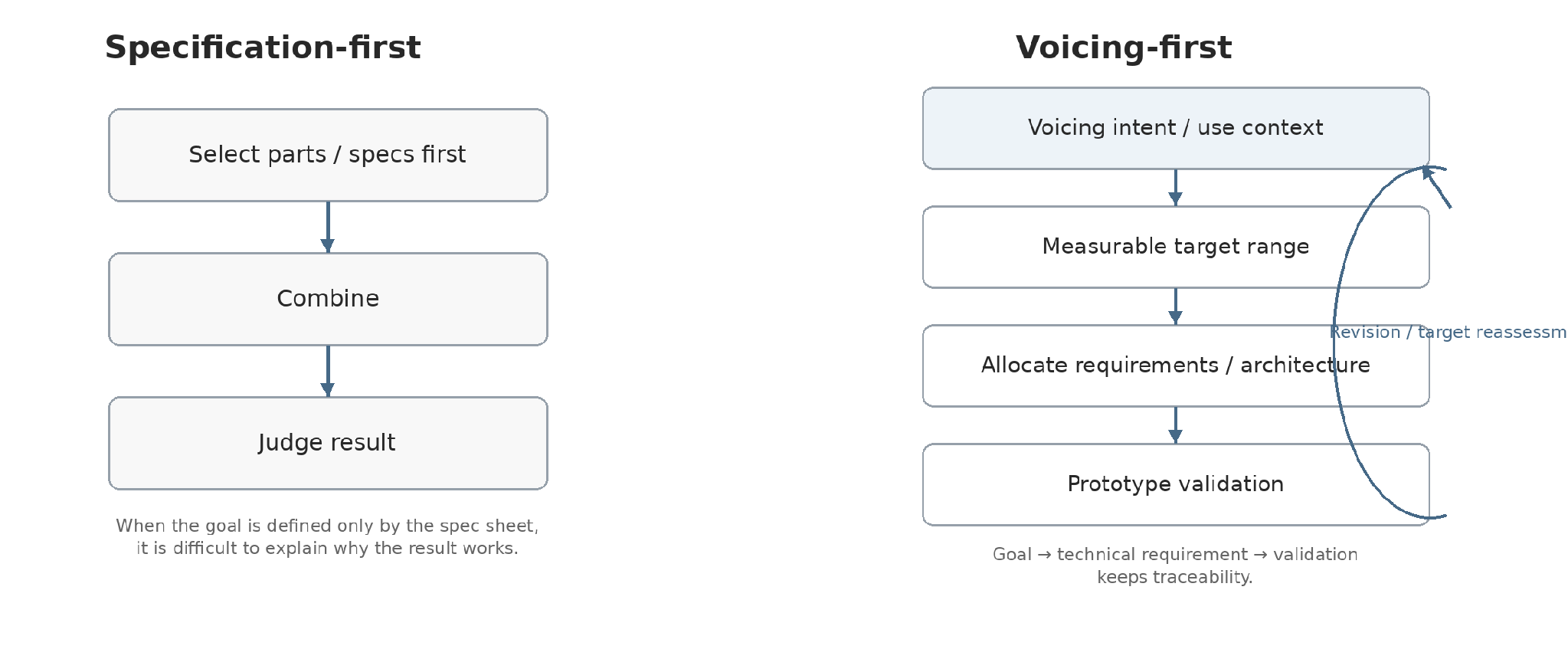
Figure 1. Specification-first versus voicing-first design.
RavenForge methodology schematic. The right-hand loop is inspired by requirements decomposition / design-solution validation, not copied from a luthiery standard [3–5].
2. Scope of “Voicing” — Do Not Conflate Acoustic Plate Tuning with Electric-Instrument Design
In acoustic-guitar making, “voicing” has long referred to the concrete practice of adjusting top thickness, bracing, modal behaviour, and related factors. In electric guitar and bass making, however, the term is also used more broadly and non-standardly for target character, pickup/electronics/wood combinations, or customer-specific sound design. B02 does not treat this latter usage as if it were a standardized scientific term.
For RavenForge, B02 defines voicing not as “choosing specific parts by tonewood intuition” but as a product-development process that converts a desired musical result into design requirements. It is therefore a systems-design method, not a direct extension of acoustic plate voicing.
Terminology Boundary Voicing before specification ≠ “tap the wood first and listen.” In B02, voicing means the sequence player / model intent → perceptual target → measurable requirement → specification → validation. |
3. Why Perceptual Language Cannot Be Translated Directly into Specifications
3.1 Timbre Is Multidimensional
Grey’s classic multidimensional-scaling study showed that perceptual differences among instrumental timbres could not be explained by a single bright–dark axis; multiple dimensions related to spectral-energy distribution, transient behaviour, and high-frequency attack energy emerged [1]. McAdams et al. likewise analysed synthesized musical timbres and separated common dimensions associated with log-rise time, spectral centroid, and spectral variation/irregularity from instrument-specific attributes [2].
Terms such as “aggressive,” “fast,” “open,” “tight,” and “warm” should therefore not be mapped directly to one frequency or one component. Perceived brightness, for example, may correlate with spectral centroid or psychoacoustic sharpness, yet studies of distorted-guitar timbre show that harmonic content and distortion conditions do not reduce brightness perception to a single simple relationship [6,7].
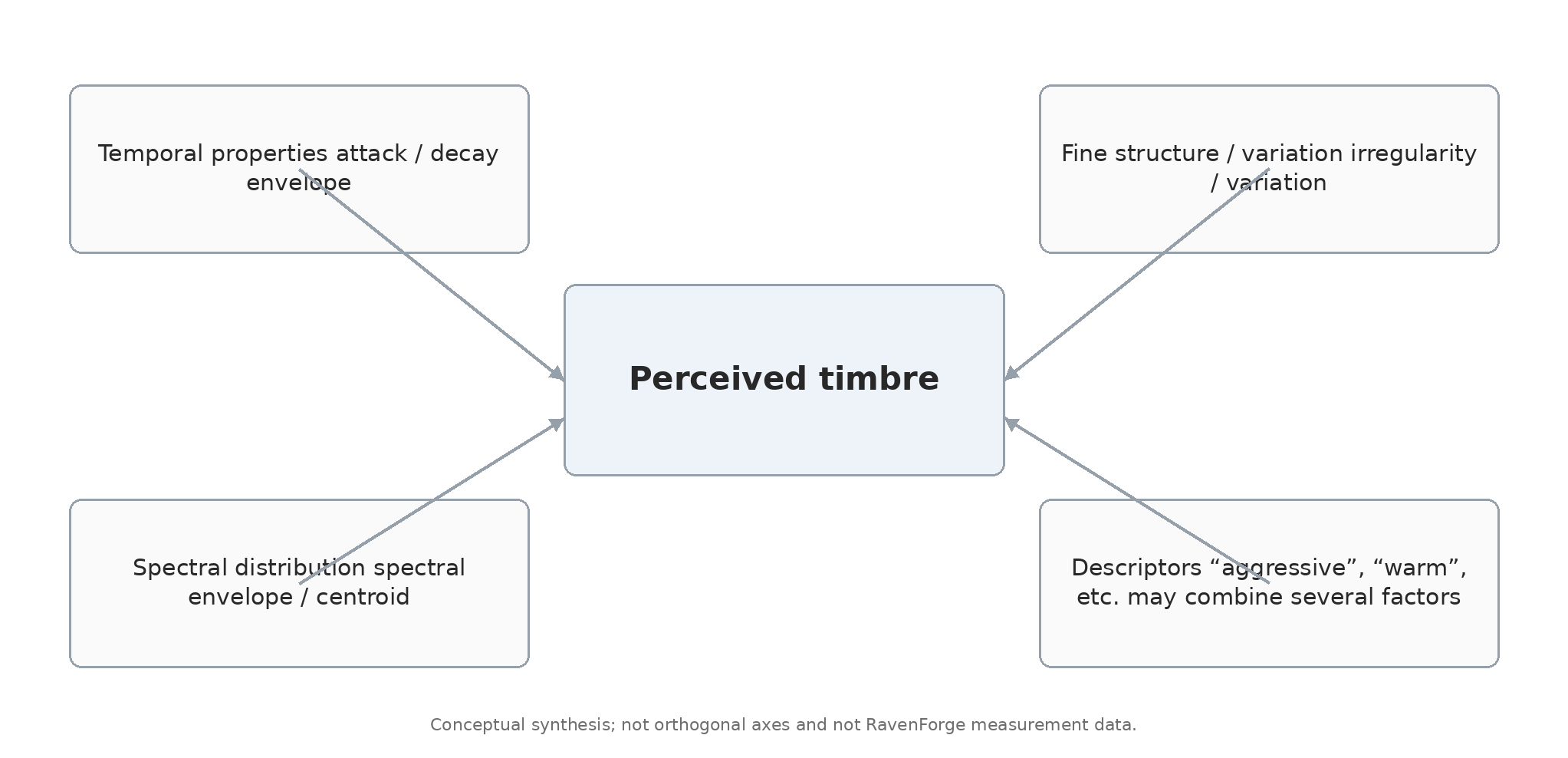
Figure 2. Why a voicing target should not be reduced to a single tone axis.
Conceptual synthesis from Grey (1977) and McAdams et al. (1995). The surrounding blocks summarize repeatedly reported timbral dimensions; they are not orthogonal measurement axes or RavenForge bass data [1,2].
Design Rule Perceptual descriptor ≠ single physical metric. Equations such as “bright = spectral centroid,” “punch = attack time,” and “aggressive = upper harmonics” are recorded only as hypotheses until they are validated. |
3.2 Translating Player Language into Engineering Language
RavenForge does not discard the customer’s or model concept’s words. Instead, it preserves them as the starting point while inserting intermediate layers before they reach the BOM. The first layer is the perceptual construct, the second a candidate measurable proxy, the third a system-level target, and the final layer the subsystem/component requirement.
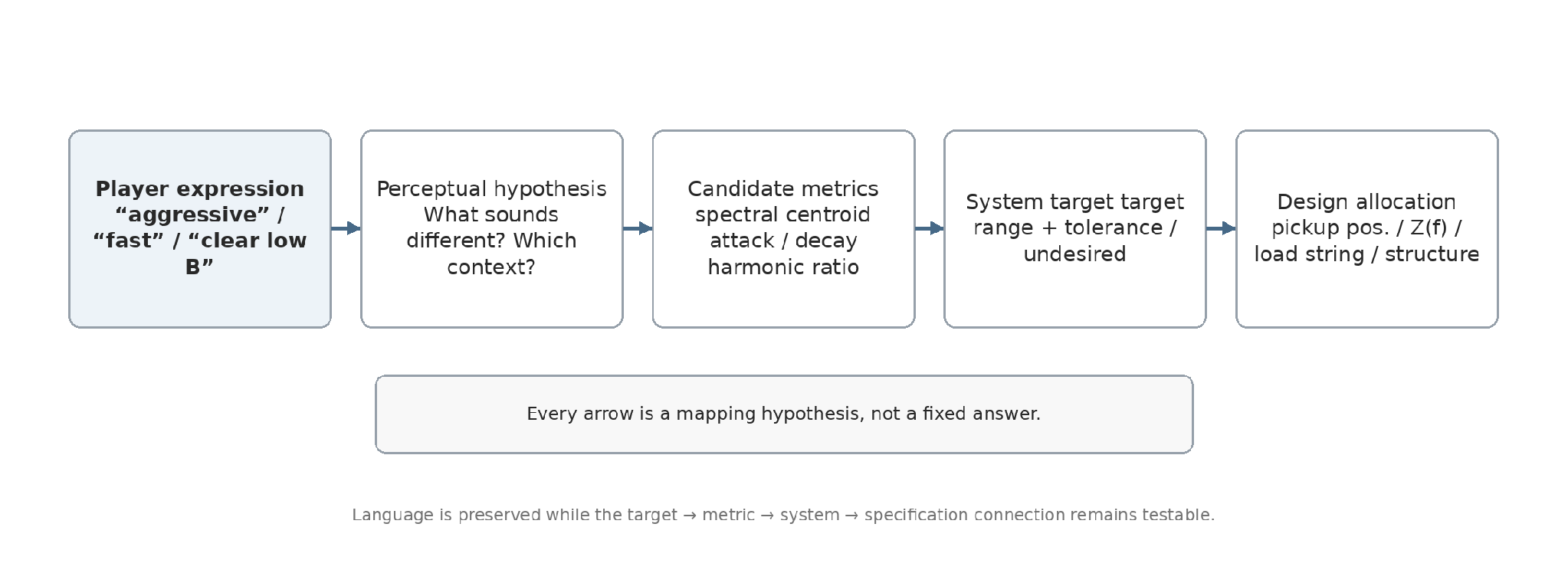
Figure 3. Translation cascade from player language to actual specification.
RavenForge working model. Arrows are hypotheses until objective and perceptual validation establish a useful relationship.
For example, “clear low B” does not immediately mean “37 inch + a particular pickup.” RavenForge first decomposes the goal into observable questions such as partial separation, decay stability, attack consistency, and the presence or absence of excessive resonance/boom in low-register notes. It then asks which subsystem—scale/string, structure, pickup coordinate, pickup Z(f), or loading—most directly controls the issue. Finally, the actual effect size is checked on the prototype.
4. Requirements-First Design — What We Can Borrow from QFD and Systems Engineering
4.1 Translating Customer Language into Technical Requirements
Quality Function Deployment (QFD) is a product-development framework for translating customer requirements into engineering characteristics and design targets. Hauser & Clausing’s House of Quality places customer language and engineering measures in the same matrix and makes target values and trade-offs explicit [3], while Akao’s QFD extends the approach across the product-development process [4]. RavenForge does not adopt the full QFD procedure; it adopts the core structure of “voice of player → measurable design target.”
4.2 Maintaining Traceability from Requirements to Components
The NASA Systems Engineering Handbook’s logical decomposition and design solution definition processes decompose higher-level stakeholder expectations and technical requirements to subsystem level, compare alternative solutions, and then verify that the final design solution satisfies the requirements [5]. What matters for B02 is not the aerospace procedure itself, but the principle of separating WHAT from HOW.
RavenForge adaptation WHAT = the musical and perceptual behaviour desired by the model/player. HOW = scale, pickup position, magnet/coil architecture, loading, material/structure, hardware, and setup. When HOW is fixed before WHAT, specification becomes cargo cult. |
5. Case Study — Torillo’s “sonical dimensions / voice design”
Torillo Custom Basses states on its official pages that it thinks in terms of “sonical dimensions” and divides customization intensity into three levels: Signature Tone, Tone Design, and Full Custom Voice. Tone Design includes presets such as Fusion, Pfuture, Tonmeister, Jfuture, and Orkus that are characterized sonically before their wood, pickup, and passive-circuit specifications are presented [8]. Full Custom Voice foregrounds “voice design” and customer-preference specification [8,9].
This structure is useful as a B02 case study because it shows that, at least in product and build communication, sonic character can be placed above the component list. Torillo phrases such as “The P in your head,” “Your session tool,” and “Metal axe” are practical examples of presenting a use case or voice concept before the technical specification.
At the same time, Torillo describes wood as the most important component and argues that wood choice helps reveal an individual voice [8,9]. This is manufacturer philosophy, not scientific evidence that a particular species produces a particular measured response. RavenForge uses the process structure as a case study but validates wood–tone causality separately.
Case-study rule Torillo proves that “voice-first customization” is a real luthiery practice. It does not prove that its chosen wood-to-tone mappings are physically unique or universally valid. |
6. Parallel Cases — How “Sound First” Is Used in Luthiery
6.1 Bacci — “Sound first. Shape second.”
Bacci’s current Marleo bass description uses the phrase “Sound first. Shape second.” and explains that the desired sound is conceived first and the bass is built around it; pickup, circuit, scale, and strings then appear under “configure your voice” [10]. This is another explicit industry example of placing sonic intent above the component configurator.
6.2 Educational Voicing — Measurement and Record-Keeping Are Part of the Process
The Galloup School’s 2025 curriculum includes dynamic testing, record keeping, and computerized analysis alongside wood selection in its Instrument Acoustics and Voicing course, and requires students to apply voicing knowledge in actual builds [11]. Although the course includes acoustic-oriented voicing, the important point for B02 is that voicing is taught alongside measurement and records rather than as intuition alone.
These three cases should not be treated as if they share one scientific method. Torillo and Bacci are manufacturer-defined examples of sonic customization; Galloup is an educational program. RavenForge uses them only as evidence of practice, while the methodological validation comes from perceptual science and requirements engineering.
7. RavenForge Sonic Brief — The Minimum Unit for Documenting a Target Voice
Every new model or custom order receives a Sonic Brief before the BOM is written. The Sonic Brief is not marketing copy but the parent requirement used to trace later measurements and design changes. Instead of a single tone adjective, it records at minimum the use context, desired contrast, unwanted behaviour, reference condition, and measurement hypothesis.
Field | Example Record | Role |
Use context | low-tuned metal / clean DI / filter-based heritage | Fixes the conditions under which the target is evaluated |
Perceptual intent | fast, aggressive, articulate | Preserves player/model language |
Reference contrast | more upper-partial definition than baseline; less boom | Provides a comparative reference rather than an absolute adjective |
Candidate metrics | Hn/H1, spectral centroid, attack/decay, loaded resonance | Defines a testable proxy |
Constraints | mass, ergonomics, procurement, passive/active compatibility | Prevents the tone target from breaking other requirements |
Validation | level-matched A/B + objective measurement | Separates channels for the final decision |
Measurement boundary A candidate metric is not a “definition of tone.” An objective proxy does not replace listening judgement, and a listening result does not replace causal tracing. |
8. Requirement Allocation — Which Subsystem Owns Which Target?
A higher-level sonic target is not assigned directly to a component name; it is first allocated at subsystem level. From A01/A02 alone, we can already distinguish roles: pickup position relates to spatial sampling, pickup electrical parameters to A03 Z(f), external load to A04, buffer behaviour to A05, and string/structure to mechanical response. Because different subsystems can contribute to similar perceptual outcomes at the same time, RavenForge does not create a “one component = one tone” mapping.
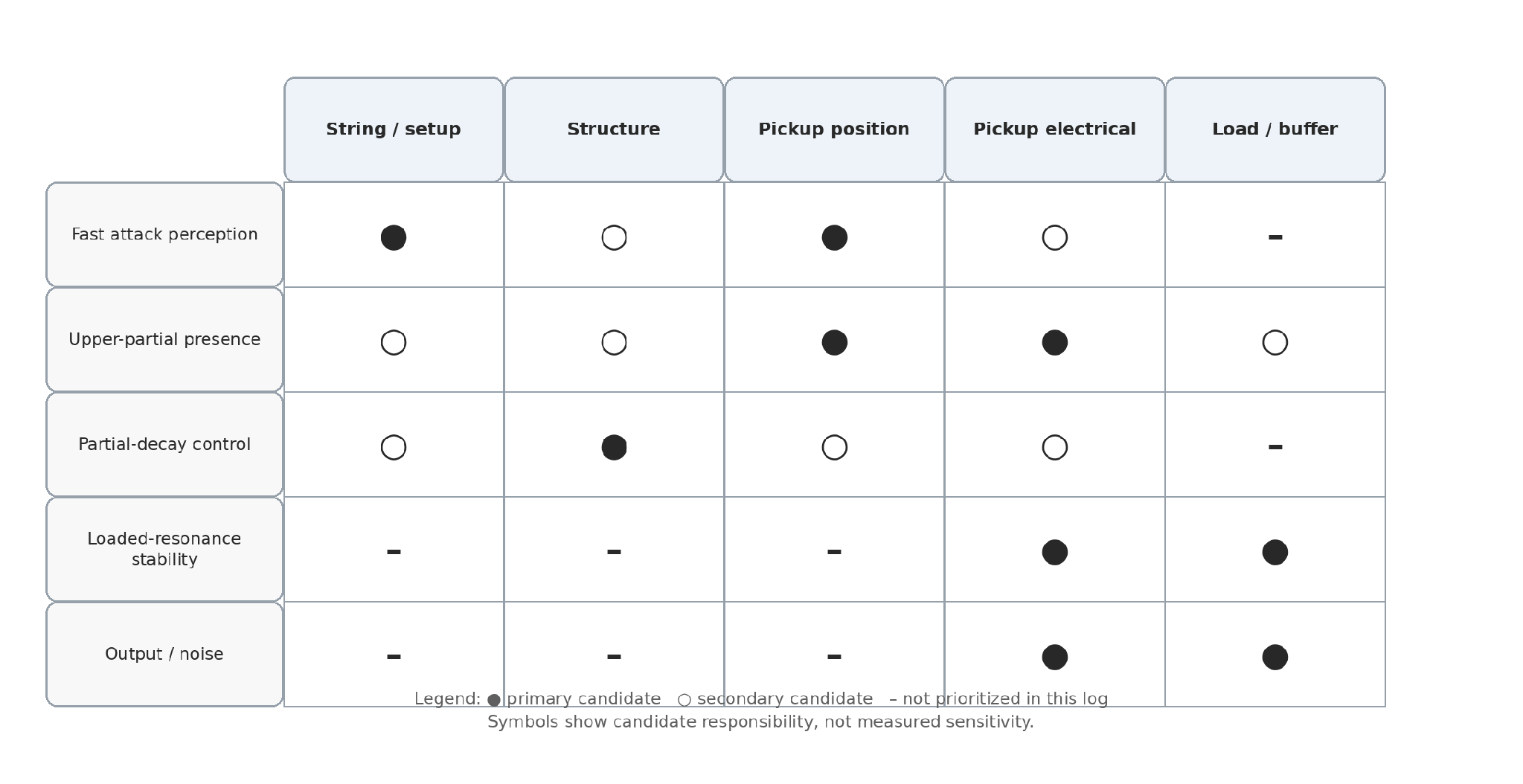
Figure 4. Example RavenForge requirement-allocation matrix.
Symbols indicate candidate responsibility only. They are not measured sensitivities. Final allocation must be revised using A03/A04/C01/C02 data.
For example, pickup position and pickup architecture are direct candidates for upper-partial presence, but plucking/setup and structural decay also change the observed spectrum. Loaded-resonance stability can be allocated primarily to pickup Z(f) and load/buffer behaviour. The purpose of the matrix is not to claim that every variable changes everything, but to decide where the first experiment should begin.
9. RavenForge Application — Treating ASKR, EMBLA, and EDDA as Target Systems, Not Spec Sheets
9.1 ASKR — Do Not Reduce “Aggressive” to the Phrase “Bridge-Near Pickup”
ASKR’s rock/metal-oriented concept and bridge-near pickup provide a useful B02 application. A02 explains what kind of geometric harmonic weighting a bridge-near position can create [R2], but it does not guarantee the perception of “aggressive.” B02 therefore keeps aggressive / fast / low-register separation in the Sonic Brief, verifies pickup-coordinate effects in C01, and separates pickup/load response in A03/A04.
Accordingly, ASKR’s final pickup coordinate is not “a Dingwall-like position” or “as close to the bridge as possible.” It is a coordinate that satisfies the target response while also passing constraints on harmonic nulls, low-register level, magnetic gap, and ergonomic routing.
9.2 EMBLA — Manage Passive Character and Active Repeatability as Separate Requirements
In EMBLA, passive / buffered / preamp architectures are not a hierarchy of “premium options.” The pickup–load interaction to preserve in passive mode and the cable/load variability to reduce in active mode can be defined as separate requirements. Even when the same adjective, “open,” is used, a passive resonance peak and a buffered broadband response may be completely different technical implementations, so the target must be specified before the hardware.
9.3 EDDA — Define Heritage as Response / Control Grammar, Not as a Component Recipe
The same logic applies to EDDA, which studies system-level heritage from Alembic/Wal lineages rather than simply reproducing a Fender-derived recipe. Instead of beginning with “vintage = Alder/Maple/Rosewood” as a specification, higher-level requirements can be framed as design questions such as the passive baseline, filter control range, and pickup/electronics interaction. Material and electronics choices then become alternative means of implementing the heritage concept.
10. Evidence Matrix — What Can B02 Actually Claim?
Claim | Assessment | Evidence | RavenForge wording |
Timbre can be represented adequately by a single physical quantity | Not supported | Grey / McAdams [1,2] | multidimensional perceptual target |
Product design includes procedures for translating customer/player language into engineering targets | Supported | QFD [3,4] | Sonic Brief → measurable target |
Traceability is needed between higher-level requirements and component specifications | Supported framework | NASA SE [5] | WHAT → HOW flow-down |
Brightness is always identical to spectral centroid alone | Too strong | timbre / distorted-guitar studies [1,2,6,7] | centroid = candidate correlate |
“Aggressive” simply means more upper harmonics | Not established | descriptor mapping insufficient | multi-metric hypothesis + listening |
Torillo uses sonic presets / voice design in its actual product structure | Supported as practice | Torillo official [8,9] | industry case study |
Torillo’s wood–tone mapping has been scientifically validated | Not established | manufacturer claim only [8,9] | do not import causality |
Bacci explicitly uses sound-first language | Supported as practice | Bacci official [10] | parallel case study |
A unique component set can be derived from a target sound | Not supported | many interacting variables | generate alternatives + trade study |
Final voicing can be decided by objective measurement alone | Not supported | perceptual target is listener-dependent [1,2] | measurement + listening |
Causality can be traced by listening alone | Not supported | requirements / measurement logic [3–5] | traceable measurements required |
11. B02-Derived Prototype Voicing Validation Protocol
The purpose of B02 is not to replace “good sound” with numbers, but to make the gap between target → implementation → result traceable. Prototype validation therefore runs objective measurement and perception testing as parallel channels.
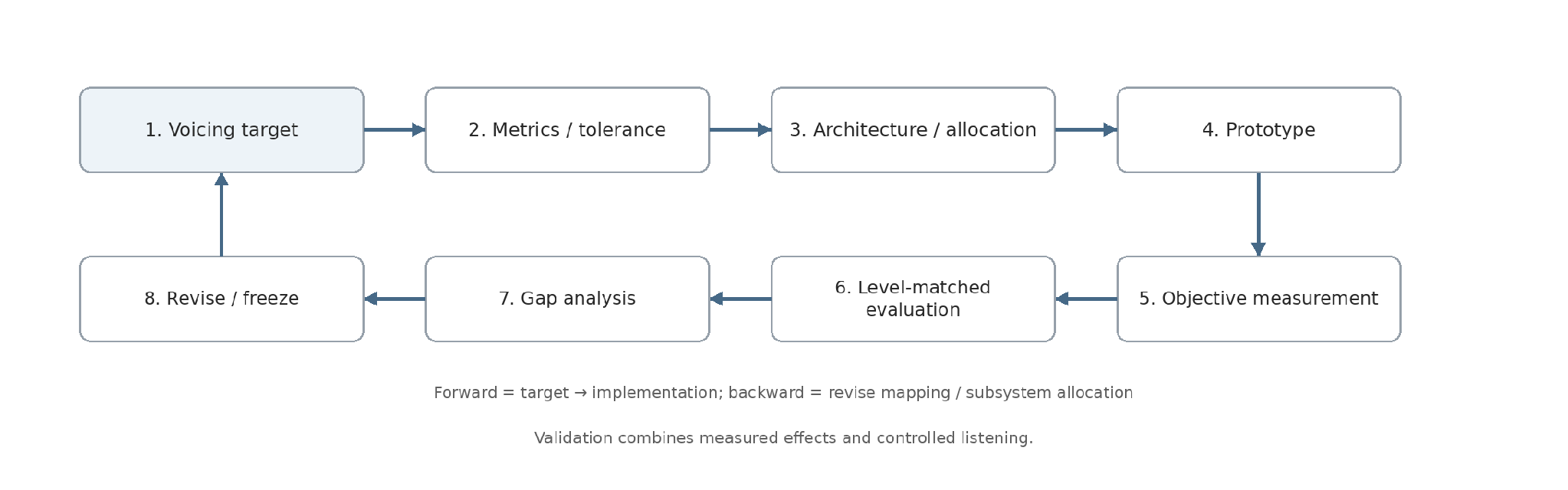
Figure 5. RavenForge voicing-validation loop derived from B02.
A target is frozen only after the implementation is measured and perceptually checked under controlled conditions. Engineering workflow, not a universal psychoacoustic standard.
Stage | Record / condition | Decision |
Sonic brief | use context, descriptor, desired contrast, unwanted behaviour | parent requirement lock |
Reference capture | baseline instrument / current prototype, level-matched DI | comparison anchor |
Metric hypothesis | spectral / temporal / decay / resonance candidates | what to measure, not what to believe |
Requirement allocation | string/structure/position/Z/load/buffer responsibility | experiment order |
Prototype A/B | one primary variable changed; other conditions locked | effect isolation |
Objective test | FFT/STFT, harmonic ratios, decay, impedance/FRF as relevant | measured effect |
Listening test | level-matched, randomized when practical, same performance or reamp | perceptual effect |
Gap analysis | target achieved? side effects? conflict with mass/ergonomics/cost? | revise mapping / target / architecture |
Specification freeze | only validated variables become BOM/CAD rules | traceable design rule |
Re-test | production prototype under real strings/setup/load | external validity |
Experimental Rule One variable per question, not one variable per instrument. A prototype can contain many differences, but each claimed causal decision must be tied to a controlled comparison or explicitly labeled as unresolved. |
12. Current Conclusion — Not Choosing “Good Parts,” but Turning Goals into Traceable Requirements
The key change RavenForge adopts in B02 is the order of the spec sheet. The familiar build-culture flow `wood → pickup → preamp → expected tone` is not prohibited; it is moved down to the implementation stage. First define the musical behaviour the model/player wants, ask what that means perceptually, establish measurable proxies, and then allocate requirements to the relevant subsystems.
This approach is also different from claiming that “science can completely define tone with numbers.” Timbre perception is multidimensional and can vary with listener and context [1,2]. Measurement therefore does not replace perception. Conversely, adjectives and listening alone make it difficult to trace which design variable actually produced a difference. RavenForge keeps both channels inside one validation loop.
Current Design Position Concept → Sonic Brief → Perceptual construct → Candidate metric → System target → Requirement allocation → Specification → Prototype → Measurement + listening → Revision. A component earns its place because it satisfies a requirement, not because it carries a prestigious name or inherited tone story. |
13. Next Research — What Passes to A03
Code | Research question | Variables Passed from B02 |
A03 | Magnetic Pickups as RLC Systems | pickup Z(f), resonance, Q, turns / gauge / topology |
A04 | Electrical Loading of Passive Pickups | pot, cable capacitance, input impedance |
C01 | Pickup Position FFT Mapping | A02 spatial target and B02 target-response validation |
C02 | Pickup Loading Measurement | A04 loaded-response validation |
A05 | Active Buffers and Input Impedance | high-Z sensing / low-Z output isolation |
References
[1] Grey, J. M. “Multidimensional perceptual scaling of musical timbres.” Journal of the Acoustical Society of America 61(5), 1270–1277 (1977). DOI: 10.1121/1.381428.
[2] McAdams, S.; Winsberg, S.; Donnadieu, S.; De Soete, G.; Krimphoff, J. “Perceptual scaling of synthesized musical timbres: Common dimensions, specificities, and latent subject classes.” Psychological Research 58(3), 177–192 (1995). DOI: 10.1007/BF00419633.
[3] Hauser, J. R.; Clausing, D. “The House of Quality.” Harvard Business Review, May 1988. QFD / customer-requirement to engineering-target framework.
[4] Akao, Y. Quality Function Deployment: Integrating Customer Requirements into Product Design. Productivity Press, 1990.
[5] NASA. NASA Systems Engineering Handbook, NASA/SP-2016-6105 Rev 2 (2016). Sections 4.3 Logical Decomposition and 4.4 Design Solution Definition.
[6] Tsumoto, K.; Marui, A.; Kamekawa, T. “Predictors for the Perception of ‘Wildness’ and ‘Heaviness’ in Distorted Guitar Timbre.” 142nd AES Convention, Paper 9748 (2017).
[7] Tsumoto, K.; Marui, A.; Kamekawa, T. “The effect of harmonic overtones in relation to ‘sharpness’ for perception of brightness of distorted guitar timbre.” Proceedings of Meetings on Acoustics 29, 035002 (2017). DOI: 10.1121/2.0000380.
[8] Torillo Custom Basses. “Creations / Series / Sonical Presets.” Official maker documentation, accessed 2026-09. https://www.torillo-bass.com/creations/
[9] Torillo Custom Basses. “About Torillo — Philosophy & Vision / Woods.” Official maker documentation, accessed 2026-09. https://www.torillo-bass.com/about/
[10] Bacci Guitars. “Marleo Parato Bass — Sound first. Shape second. / Configure your voice.” Official maker documentation, accessed 2026-09. https://bacciguitars.com/parato/bass/
[11] Galloup School of Guitar Building and Repair. 2025 Catalog — Instrument Acoustics and Voicing curriculum: dynamic testing, record keeping, computerized analysis, and application in building.
[R1] RavenForge / Signal & Transduction Research Log A01. “From Mechanical Vibration to Electrical Signal.” 2026.09.05.
[R2] RavenForge / Signal & Transduction Research Log A02. “Pickup Position and Harmonic Sampling.” Verified Korean revision, 2026.09.06.
[R3] RavenForge / Liberal Arts Research Log L02. “The Instrument as an Extension of the Body.” 2026.09.03.
Source Status and Interpretation Boundary B02 separates three evidence classes. Timbre-perception literature supports the view that perceptual targets are multidimensional, while QFD / systems engineering provide general design methods for translating stakeholder language into technical requirements and specifications. Torillo, Bacci, and Galloup are examples of luthiery practice; their individual wood–tone or component–tone causal claims are not used as scientific evidence. The RavenForge Sonic Brief, requirement-allocation matrix, and validation loop are internal engineering frameworks derived to apply these sources to instrument R&D. |
Working research document · 2026.09.08